
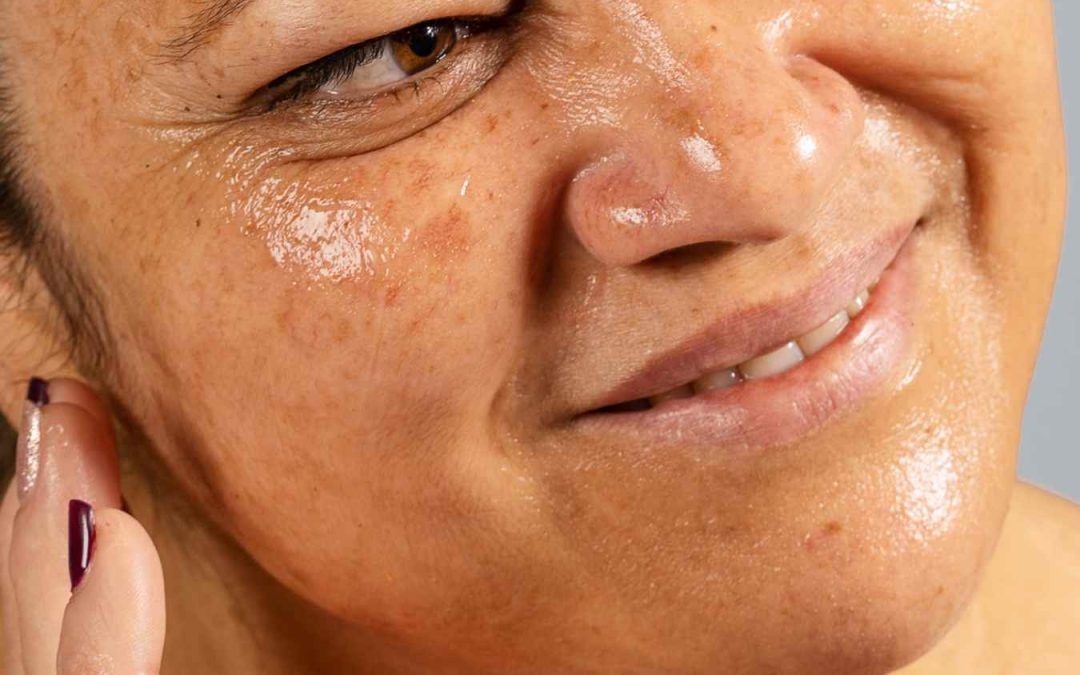
Oily skin is one of the most misunderstood skin types. People often assume it only affects teenagers or those dealing with acne—but that is far from true. Many adults, even into their 40s, 50s, and beyond, find themselves blotting, powdering, and wondering why the shine won’t quit.
Before you declare war on your sebaceous glands, let’s unpack what’s actually happening—and how to manage oil safely and effectively.

Is Oily Skin Actually Dehydrated?
Surprisingly, yes—many people with oily skin are actually dehydrated.
When your skin is lacking water, not oil, it tries to compensate by producing more sebum. The result?
A face that’s shiny and thirsty at the same time.
Signs your oily skin may actually be dehydrated:
- Skin feels tight after washing
- Makeup separates or looks patchy
- You’re oily but also flaky
- Skin feels rough or looks dull under the shine
The solution isn’t stripping oil—it’s hydrating smartly and using products that balance, not punish, your skin barrier.
What’s the difference between dry skin and dehydrated skin?
Dry skin is a skin type — meaning your skin naturally produces less oil (sebum). This is genetic and long-term.
Dry skin often feels tight, rough, or flaky because it’s missing nourishing lipids that keep the barrier soft and flexible.
Dehydrated skin is a condition — meaning your skin is lacking water, not oil. Even oily skin can be dehydrated. When this happens, the skin often overcompensates by producing more oil, creating that confusing “shiny but tight” feeling.
Quick way to remember it:
- Dry = lack of oil
- Dehydrated = lack of water
Good skincare can replenish both — but with different ingredients and strategies.
Can Older Adults Get Oily Skin? Absolutely.
Oil production can peak in our teens and 20s, but genetics, hormones, weather, medications, and dehydration can make adults of any age oily.
Women commonly experience oiliness during:
- Perimenopause
- Hormonal fluctuations
- Times of chronic stress
- High heat and humidity
- Post-travel or post-flight dehydration
Oily skin is not a teen-only club. It’s a lifelong skin condition that simply changes over time.

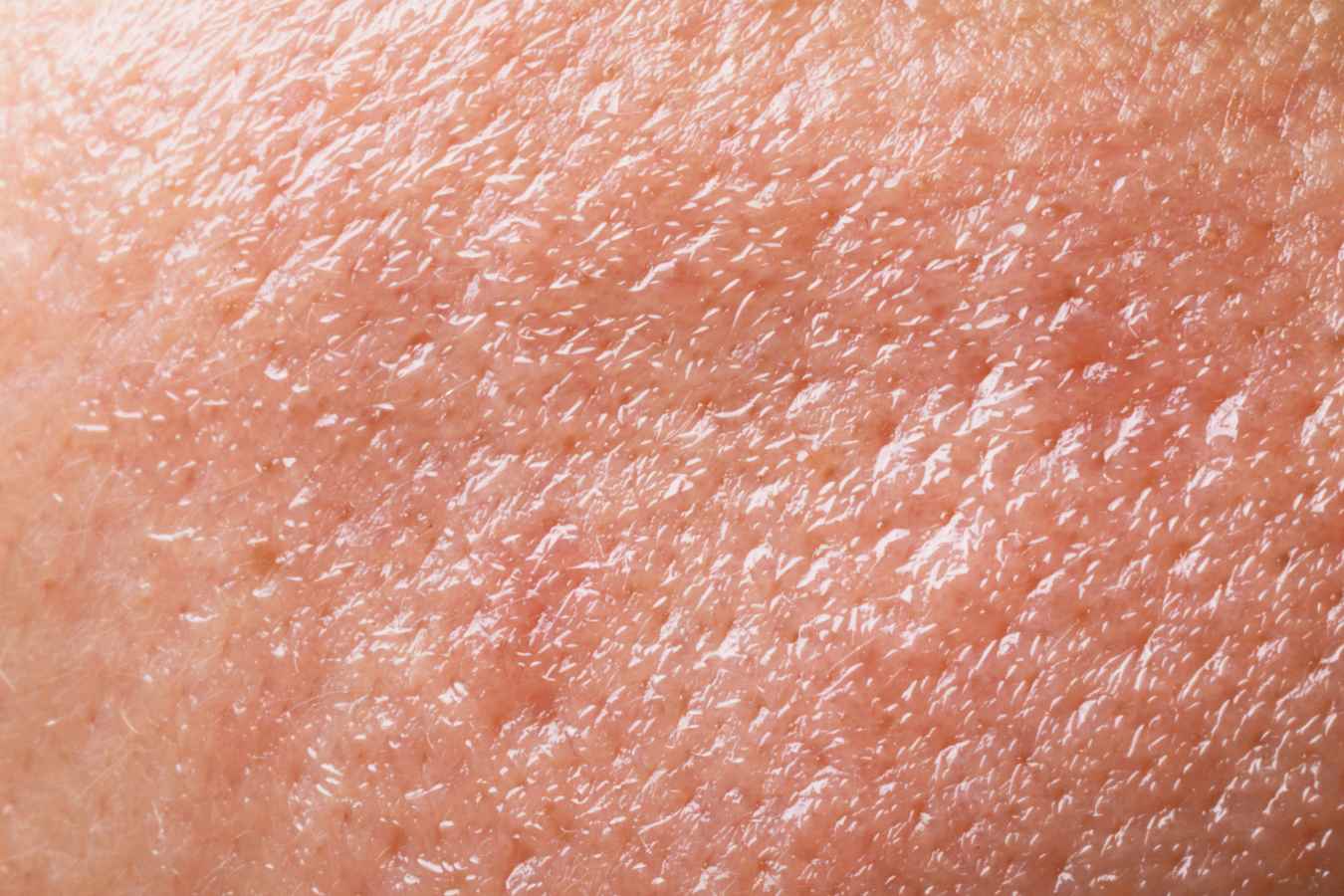
Why Do People With Oily Skin Have Bigger Pores?
Sebum naturally travels through your pores, so when your skin produces more oil, the pore opening can stretch—just like a doorway used more often.
Important:
Pore size is mostly genetic.
BUT—oil production, sun exposure, and age do affect how visible they look.
Do pores get bigger with age?
Yes—but not because of oil.
As we age, collagen decreases, making pores less supported and more visible.
You cannot shrink pores permanently.
But you can refine and tighten their appearance through targeted products and treatments.

Daily Skincare Routine for Oily Skin
Here’s a routine that balances sebum without dehydrating your skin:
Morning Skincare Routine
Morning
- Gentle cleanser: Removes oil without stripping your barrier.
- Hydrating gel moisturizer
Lightweight, non-comedogenic hydration. - SPF designed for oily skin. EltaMD UV SPF 46 contains niacinamide, which helps regulate oil production.
Vitamin C serum (applied before moisturizer) is excellent for oily skin because it brightens, supports collagen, and helps refine the look of pores. However, since the most effective forms of vitamin C are typically suspended in oil-based serums, some users prefer applying it at night to avoid added shine during the day.
Evening Skincare Routine
- Double cleanse if you wear makeup or SPF
- Vitamin C serum : Helps with clarity, collagen, and pore appearance.
Alternate nights:
- AHA/BHA exfoliant 2–3x per week: Clears excess oil, decongests pores
- Retinol (Alternate nights with AHA/BHA) Helps refine pore appearance over time.
This whole routine supports hydration, skin refining + oil control without suffocating your skin.
In winter, if your skin feels drier, you can finish your night routine with your usual moisturizer. However, many people find that Vivier actives—such as retinol or AHA/BHAs—are enough on their own because Vivier formulates them with hydrating, barrier-supportive ingredients.
Keep reading to explore treatments to support your daily routine!

Professional Treatments That Help the Look of Large Pores (and oily skin)
You can’t change pore structure—but you can change how they appear. Here are our client favourites:
Laser Treatments
PicoSure, IPL, or Fractional Laser
- Improve texture
- Reduce pigment that shadows pores
- Stimulate collagen to firm pore walls
- Start with one monthly treatment for 3 months.
Non-Energy-Based Alternative: Microneedling
Non-Energy-Based Alternative: Microneedling
- Generates new collagen
- Smooths and tightens the appearance of pores
- Great for oily + acne-scarred skin
- Start with one monthly treatment for 3 months.
Maintenance: Chemical Peels
Chemical Peels
- Dissolve dead skin
- Reduce oil production
- Help clear congestion
- Excellent for maintenance (about every 6 weeks)

Does Having Oily Skin Affect SPF or Makeup Wear?
YES—oil breaks down makeup and sunscreen faster.
To help:
- Choose oil-free mineral SPF
- Use a light gel moisturizer under sunscreen
- Set your SPF or makeup with a powder like Colorescience Sunforgettable EnviroScreen Brush-On Shield
This powder SPF is a favourite because it:
✔ Controls shine
✔ Sets makeup
✔ Allows reapplication throughout the day
✔ Boosts sun protection without adding greasiness
Blotting Sheets & Powders: Pros and Cons
Blotting Sheets
Pros:
- Great for mid-day shine
- Won’t disturb makeup
- Prevents over-powdering
Cons:
- Can encourage more oil production if you rub too hard
TIP:
Press, don’t drag.
Powders
Pros:
- Absorbs oil
- Sets makeup
- Colorescience Brush-On SPF adds sun protection
Cons:
- Too much powder can clog pores
- Can look cakey on dehydrated skin
TIP:
Blot first → powder second. Never layer powder on top of wet shine.

Frequently Asked Questions About Oily Skin
Is Having Oily Skin Good or Bad?
Both!
Pros:
- Ages more slowly
- Natural lubrication
- Stronger skin barrier
- Fewer fine lines early in life
Cons:
- Visible shine
- Larger-looking pores
- Makeup breakdown
- More congestion or blackheads
Oily skin is not “bad”—it’s just a skin type that needs the right rhythm.
What Causes Oily Skin?
You can be oily because of:
- Genetics
- Hormone fluctuations
- Hot/humid climate
- Dehydration
- Certain medications
- Over-exfoliating or over-washing
- Stress (increases cortisol → increases oil)
- Wrong skincare products
What Does It Mean If Skin Looks Shiny?
You just have seborrhea → the medical term for overactive sebaceous glands…oily skin.
Common, manageable, and not dangerous.
How Do I Stop My Skin From Being So Oily?
Start at the top of this article!
The goal is not to stop oil—your skin needs it.
The goal is balance: hydration, gentle exfoliation, lightweight moisturizers, and targeted treatments that refine texture without stripping your skin.
Oily skin is not a flaw—it’s simply a skin condition that needs smart, consistent care.
With the right products, thoughtful makeup choices, and occasional professional treatments, you can keep shine under control and keep your skin strong, balanced, and beautifully healthy. You got this!